CS-hEDS
Certification for Physical Therapists
Become the PT they’ve been looking for.
Build expertise in hypermobility.
Bring greater clarity to complex care.
Quick Jump to:
6
Regional core courses
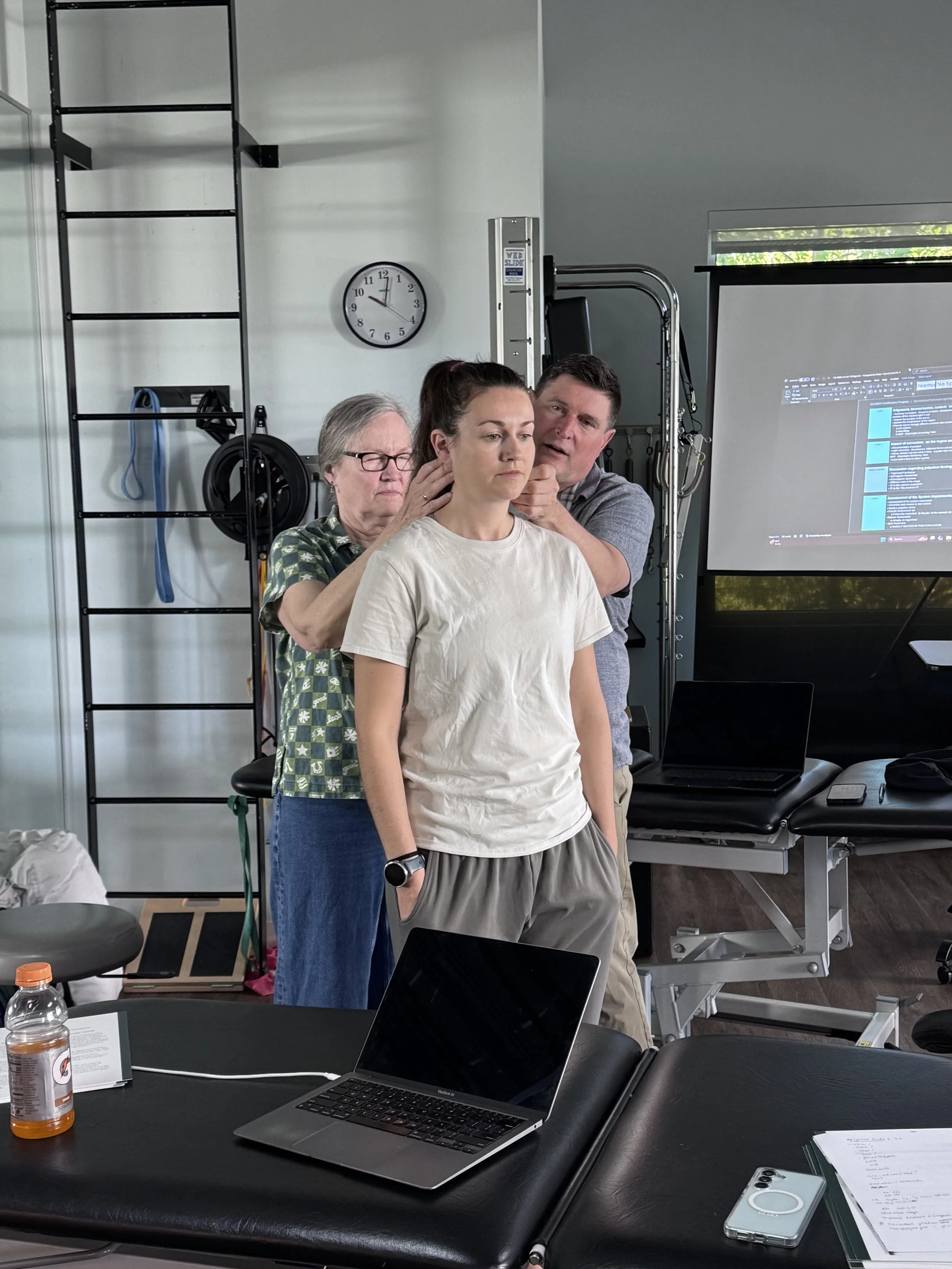
Hands-on
In-person learning with a 20+ year veteran physical therapy instructor
48
Hours of core coursework
Build a meaningful niche.
Meet a meaningful need.
Be a clinician patients can turn to when their symptoms are complex and their path forward feels uncertain. People living with hypermobile Ehlers-Danlos syndrome (hEDS) and hypermobility spectrum disorders (HSD) need care that accounts for their individual presentation, tolerance, and goals. They deserve to be heard - and to understand the plan.
CS-hEDS helps you develop a focused area of practice around that need. Build the skills to ask better questions, connect your findings, explain your decisions, and work toward meaningful function with your patients.
01 / CLINICAL VALUE
Know what to prioritize.
Move from a long list of symptoms to a reasoned assessment of the impairments and contributing regions that matter most.
02 / PRACTICE VALUE
Build a recognizable focus.
Develop expertise you can clearly communicate to patients, referring providers, and colleagues. Give your practice a distinct clinical purpose.
03 / PATIENT VALUE
Make progress personal.
Connect treatment to the activities each person wants to reclaim. Support confidence, self-management, and collaboration along the way.
A whole new way to look at your existing caseload.
The skills extend to any patient with a hypermobile or unstable spinal segment, joint, or region - adapted to that patient's findings and needs.
The back that keeps flaring.
Explore segmental control, loading, and the contribution of adjacent regions. Use reassessment to test whether your intervention changes a meaningful task.
The shoulder that lacks control.
Consider how joint positioning, scapular mechanics, the thorax, and graded stabilization relate to reaching, lifting, or sport.
The lower limb that struggles under load.
Connect the pelvis, hip, knee, foot, and ankle to functional tasks. Refine cueing and progress load according to the patient's response.
A patient does not need an hEDS diagnosis for these principles to be useful. Hypermobility alone does not establish the cause of pain; your examination guides the plan.
Make every clinical decision count.
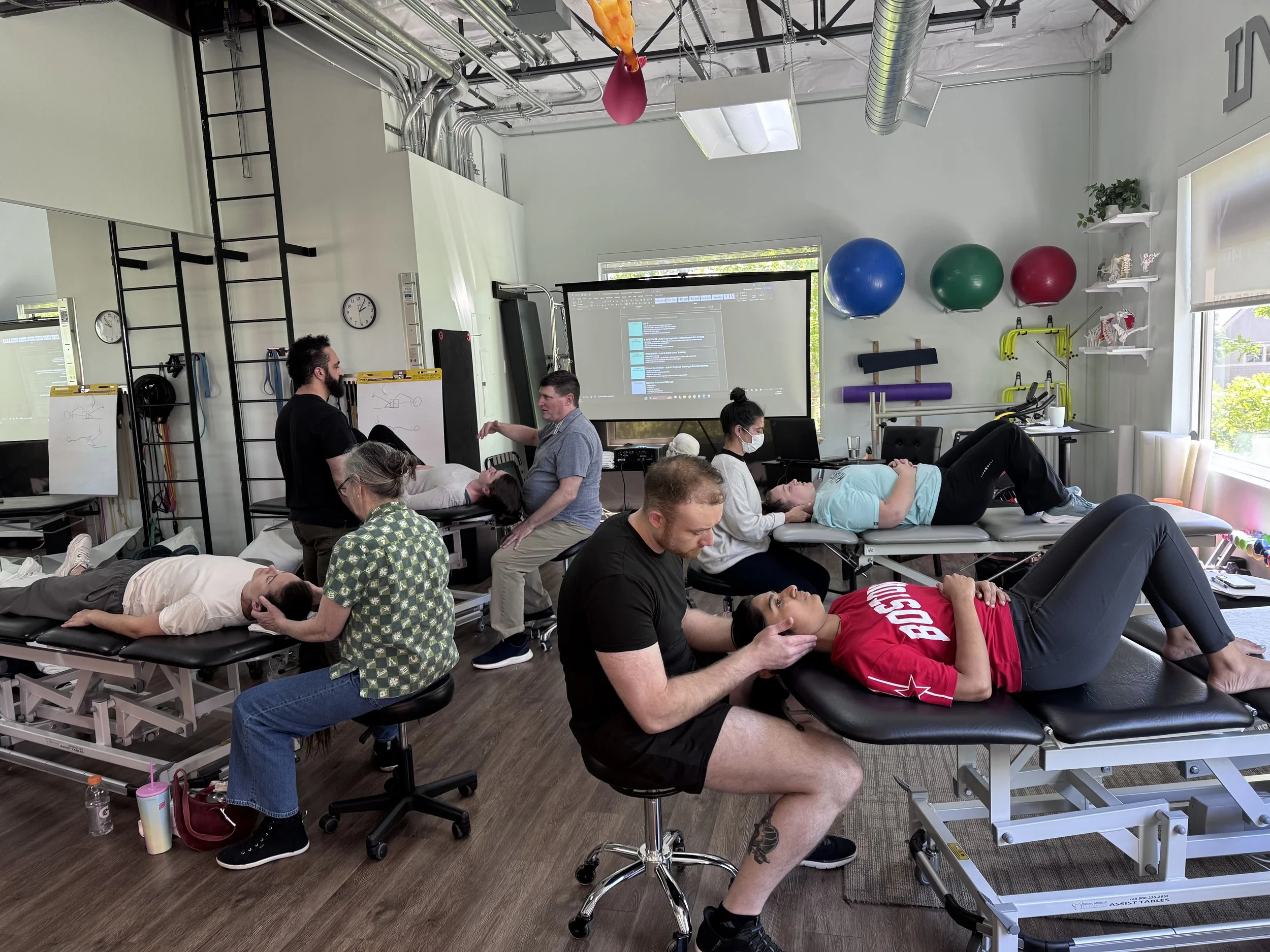
A repeatable sequence connects observation, regional assessment, hands-on intervention, and active rehabilitation. Reassessment keeps the patient's response at the center.
01
Understand the presentation
Observe
Start with the person, their meaningful activity, and their movement strategy.
Assess
Use targeted screening, functional tasks, and regional or segmental testing.
Cluster
Bring findings together to prioritize potential contributors and guide your next step.
Precision in the examination.
Practice meaningful screening tasks, regional biomechanics, and assessment of potential contributors beyond the site of pain.
02
Test your reasoning
Correct
Trial an appropriate change in support, positioning, movement, or manual input.
Reassess
Retest the meaningful task. Did it help? Let the response refine your hypothesis.
Cue
Find the words, contact, or feedback that help the patient reproduce the change.
Judgment in the treatment.
Refine manual therapy selection and dosing, recognize when support or stabilization is needed, and connect any short-term change to active rehabilitation.
03
Build usable capacity
Stabilize
Develop motor control, proprioception, and endurance at a tolerable starting point.
Integrate
Connect regional gains to the patient's whole movement and daily activities.
Progress
Increase demand thoughtfully, guided by tolerance, function, and goals.
Respect for the whole person.
Consider irritability, fatigue, autonomic symptoms/POTS, pacing, and flare planning. Recognize red flags and when to coordinate with medical providers.
Six regions.
One connected clinical approach.
Teaching, hands-on labs, technique outlines, review questions, and mock patient cases connect the course material to decisions you make in practice.
-
Connect observation and movement screening to targeted cervical and craniovertebral assessment. Refine clinical reasoning, recognize red flags, and integrate appropriate cueing and stabilization.
-
Examine shoulder mechanics and regional contributions to upper-limb function. Practice assessment-led decisions about positioning, manual input, taping, stabilization, and graded loading.
-
Explore thoracic and rib mechanics, breathing, and their relationships to movement elsewhere. Link regional findings to meaningful screening tasks and functional integration.
-
Develop segmental assessment and clinical reasoning for lumbar presentations. Integrate the influence of adjacent regions with cueing, stabilization, reassessment, and progression.
-
Examine pelvic and hip relationships, movement options, and compression strategies. Use functional tasks to explore contributors and guide treatment, control, and load tolerance.
-
Connect knee mechanics, tibial rotation, and rearfoot-forefoot relationships to weight-bearing function. Apply regional assessment, cueing, and graded stabilization across the lower limb.
-
Work through mock patient cases and explain your clinical reasoning. Build an evaluation from key subjective questions, meaningful screening tasks, regional tests, potential contributors, and a plan for reassessment. This preparation course is an additional 8 hours.
Core Courses 1-6: 8 hours each | 48 Washington PT credits, as listed by Connective Strength.
YOUR INSTRUCTOR AND PROGRAM DEVELOPER
Bret Swigard
PT, MPT, OCS, FAAOMPT, LJLCP, COMT, CDNS, c. MDT
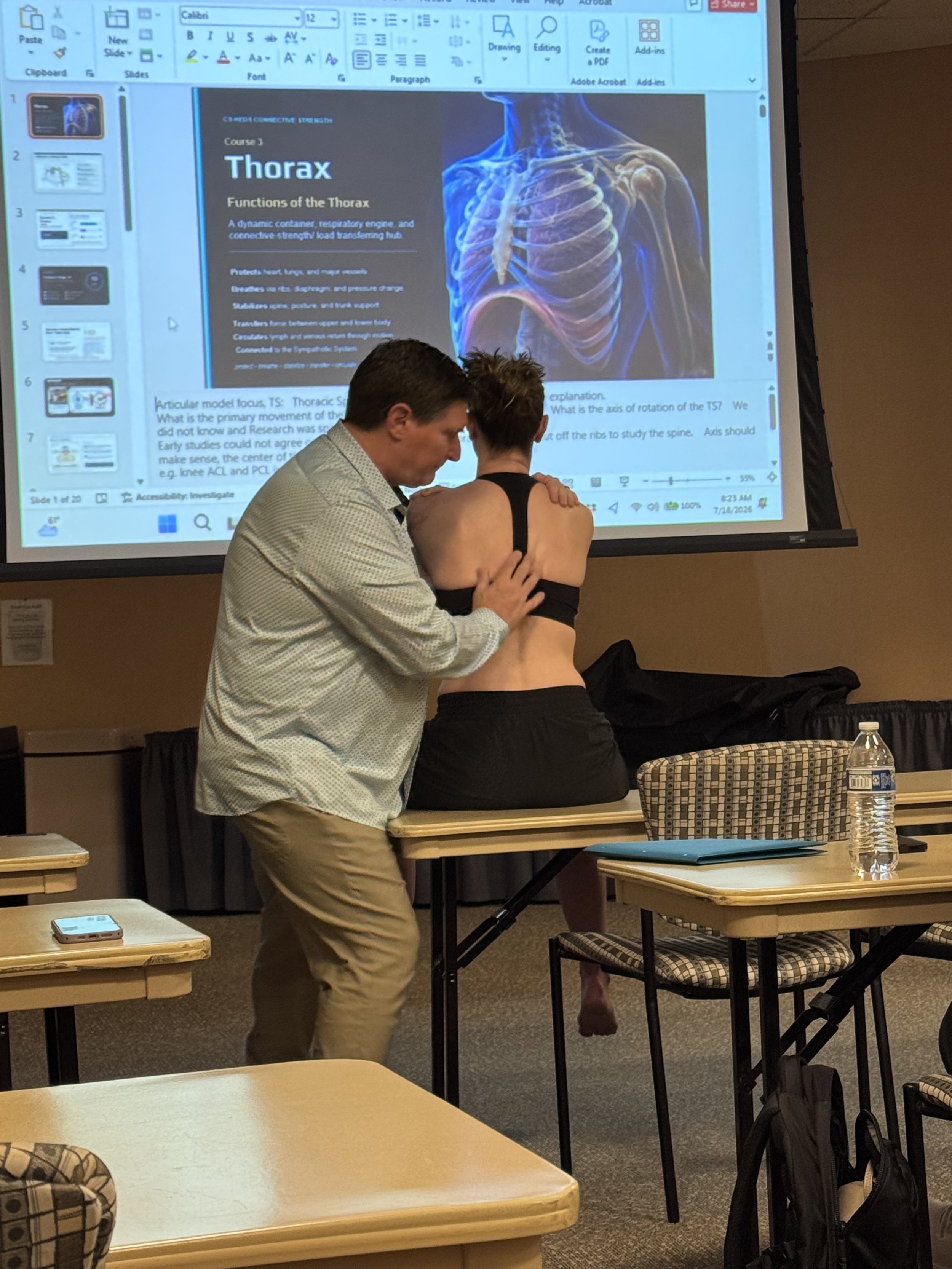
A practicing clinician. An experienced educator. A mentor who connects the details to the whole person.
Bret brings more than 20 years of orthopedic clinical experience to CS-hEDS. As the owner of Innova Physical Therapy, he combines patient care with a longstanding commitment to teaching and mentoring physical therapists.
His experience spans professional dancers, professional and collegiate athletes, and people pursuing everyday goals. He has taught orthopedic manual therapy in the United States and Canada and serves as an Aspire OMT faculty member and clinical fellowship instructor.
He developed CS-hEDS to connect detailed regional examination with individualized treatment, continuous reassessment, and meaningful function.
OCS
Orthopedic Clinical Specialist
FAAOMPT
Fellow of the American Academy of Orthopaedic Manual Physical Therapists
Clinical educator
APTA Certified Advanced Clinical Instructor; fellowship teaching and mentoring
ConnectTherapy™ Certified Practitioner and Connective Strength executive board member
Whole-person perspective
Help more patients find care that understands them.
Education, awareness, and advocacy through Connective Strength.
ENROLLMENT
Start with a course.
Build toward certification.
INDIVIDUAL COURSE
$250
Per course. Eight hours of clinical learning.
COURSES 1-7 BUNDLE
$1,487.50
Published bundle price. Save 15% ($262.50) on the $1,750 course total.
CS-hEDS is Connective Strength's Manual Therapy Certification in Hypermobility & EDS. Complete all six core courses, then undertake the certification assessment, including the oral practical. Course 7 offers optional preparation.
CS-hEDS is a Connective Strength certification, distinct from ABPTS board certification.
PTs developing an area of practice in hypermobility and clinicians already treating these patients. An established hEDS/HSD caseload is not required.
Who is it for?
The published pathway allows Courses 1-6 in any order as offered; all six are required before the oral practical.
Can courses be taken in any order?
Courses 1-6 are listed at 8 Washington PT credits each (48 total). Confirm other states' requirements and any Course 7 credit with the program team.